
Anup's FI/RE journey via investing and Options
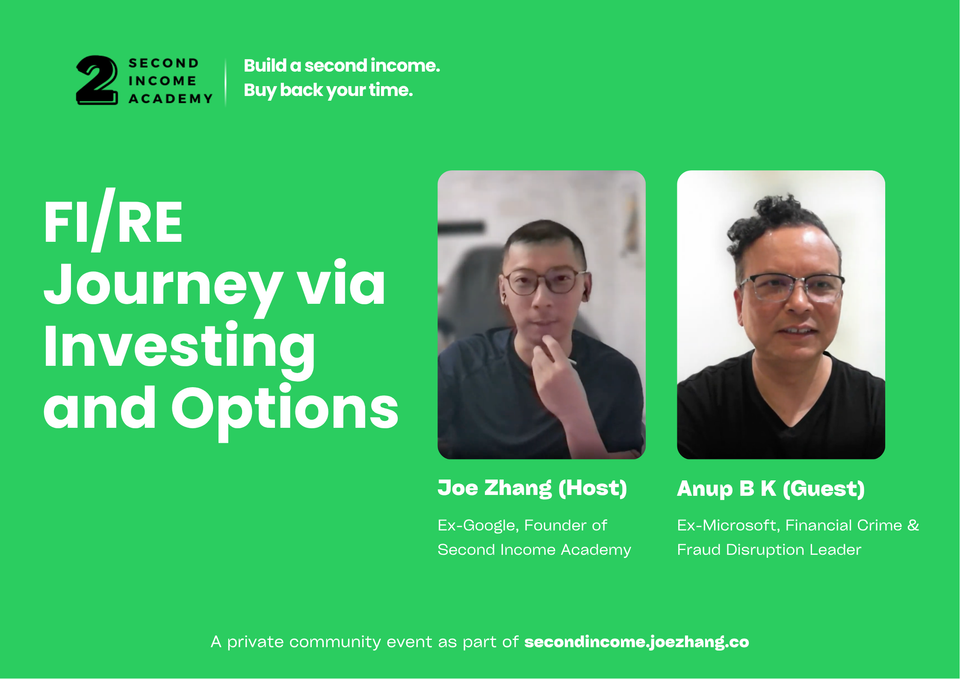
Last weeks, I gave the Second Income Academy community call to someone else.
Anup found my writing on LinkedIn earlier this year. He spent close to three decades across law enforcement and big tech (Microsoft), most of it investigating cybercrime. He started selling options in 2020, and last year he left corporate to see if he could live on it.
Most members on that call are in their first months of selling options. Anup is a few years ahead on the same road, so we had a cozy fireside chat about this experience so far.
Five key lessons I took aways
1. Turn your day-job skill into your investing skill. He is a lawyer by education, but a curious investigator by nature and says he is "not a techie". What he had was years of dashboards and spreadsheets, pulling the who, when, where and how out of the noise. He reads markets the same way. He reads markets the same way, looking for the few signals that will eventually decide the outcome.
2. Keep dry powder for the downturn. April 2025, the tariff driven global sell-off, was his first real panic. It was also his best opportunity, because he always holds cash he hasn't committed. He doesn't borrow on margin. It probably costs him some additional return, but he would rather sleep better at night.
3. Ignore the noise. Stay with the stocks you know. He started, in his words, like a "bull in a china shop": too many tickers, too many deltas and gammas. Today he sells options on five names at most. Two index ETFs and a few big tech companies, because tech is the industry he worked in. After years on the same few, he said, you know their ceiling and you know their floor. He was plain about the cost too: "I know that I'm over-concentrating myself."
4. Use simple strategies. Stay with the plan. His income comes from one move, repeated: selling cash-secured puts about 45 to 60 days out. He used to hold every contract to expiry. Now he closes at 50% of the profit and opens the next one. He sets that exit the moment he enters, so there is nothing left to decide later.
5. Take the yearly view. February this year was a bad month for him. May and June made up for it. He tracks every month but judges himself once, when he closes the books on 31 December.
The line I kept
Near the end he brought up Morgan Housel's Same as Ever:
Risk is whatever is left over after you think you've considered everything.
A few tickers, one to two strategies that work well and cash on the side, this is what you need to build a substantial income from investing and stock options.
P.S. Looking to build a second income with other fellow Big Tech professionals? check out the upcoming cohort of the Second Income Academy program.